

A technician walks the outside of the house, spends 20 minutes looking at the slab edge and the flower beds, and comes back with a number. The number is the part everyone remembers. It is also the least regulated thing in the conversation.
Texas has rules about what else has to come with that number, and they are more specific than most homeowners expect. The state does not set termite prices, does not require a company to offer a warranty, and will not settle an argument about one. What it does regulate, in detail, is the paperwork that has to be in your hands before anyone opens a drum of termiticide on your property, and then what the company is permitted to do once that paperwork exists.
Three rules do the work, and they sit next to each other in the same division of the Texas Administrative Code. Section 7.174 lists what a proposal must contain. Section 7.172 governs the treatment itself and ties it back to the proposal. Section 7.173 covers pre-construction work, the soil treatment that goes in before a slab is poured. All three were adopted to be effective 1 September 1987, adopted again effective 9 January 2018, and last amended effective 16 January 2023, so a proposal written to an older template is working from superseded text.
The Texas Department of Agriculture’s public guidance condenses the first of those into five documents: a diagram of the structure, a label for any pesticide recommended together with the proposed concentration, the complete details of the warranty, definitions of the types of treatment, and the signature of someone licensed in the termite category. That is a fair outline.
The rule lists thirteen items, and the difference is how much it pins down. The diagram must carry numerical perimeter measurements and five other specified markings. The definitions must be printed at a set minimum size, with “spot treatment” given a numerical threshold. Four further items do not appear in the outline at all: the consumer information sheet, the jurisdiction statement, the pre-construction guide, and the business identification including the TPCL number. Those specifics are what make two bids comparable.
A verbal quote is legal, but only as a range
Section 7.174(a) settles a common frustration. Verbal estimates “may be provided to customers to advise of a general range of treatment costs,” and that is the whole of what a verbal quote is permitted to do. A written estimate has to be provided before a treatment begins.
So the technician in the driveway quoting a figure is not doing anything improper. He is also not giving you an estimate in the sense the rule means. The document comes later, and the treatment cannot start until it does.
The same subsection limits who may produce it. Written estimates and treatment disclosure documents “shall only be made by licensed technicians or certified applicators licensed in the termite category.” A general pest control license is not enough; the termite category is a separate credential.
The documents attach to treatments for subterranean termites, drywood termites, powder post beetles, wood boring beetles and related wood destroying insects. The rule carves out carpenter ants explicitly.
Our guide to what direct supervision lets a pest control company do covers who has to be present when the work happens, which is a separate question from who may sign the proposal.
What a Texas termite estimate must include: the 13 items in 4 TAC 7.174
Section 7.174(b) opens with “must include, but is not limited to,” then lists thirteen. Read as a group they do four jobs: identify the company, describe the structure, describe the treatment, and tell you where to complain.
Identifying the company. Item 1 requires the business name, address, phone number, TPCL number and the date the written estimate was submitted. Item 6 requires the signature of approval by a certified applicator or licensed technician in the termite category employed by the company making the proposal. Item 13 requires a jurisdiction statement, and the rule supplies the wording: “Licensed and regulated by: Texas Department of Agriculture, P.O. Box 12847, Austin, TX 78711-2847, Phone (866) 918-4481, Fax (888) 232-2567.”
Describing the structure. Item 2 is the address or physical location of the structure. Item 3 is the diagram, which carries six sub-requirements of its own.
Describing the treatment. Item 4 is a label for any pesticide recommended or used. Item 5 is the complete details of the warranty provided, if any. Item 7 is the concentration of termiticide used, or the minimum number of bait stations to be installed. Items 8 and 11 are sets of definitions that must appear in at least 8-point type. Item 10 applies to pre-construction work.
Telling you where to go. Item 9 is a statement, also in at least 8-point type, that has to read: “For all treatments there will be a diagram showing exactly what will be treated. Treatment specifications and warranties for those treatments may vary widely. Review the pesticide label provided to you for minimum treatment specification. If you have any questions, contact the pest control company or the Texas Department of Agriculture, P.O. Box 12847, Austin, Texas 78711-2847. Phone (866) 918-4481.” Item 12 is a consumer information sheet as described in Section 7.147.
TDA’s own guidance adds a line the rule does not: “At no time will a proposal be given on the back of a business card, all supporting documents must be given as described above prior to treatment.” The practical reading is that a figure written on something pocket-sized is not a proposal, whatever was said alongside it.
The diagram is the center of the whole document
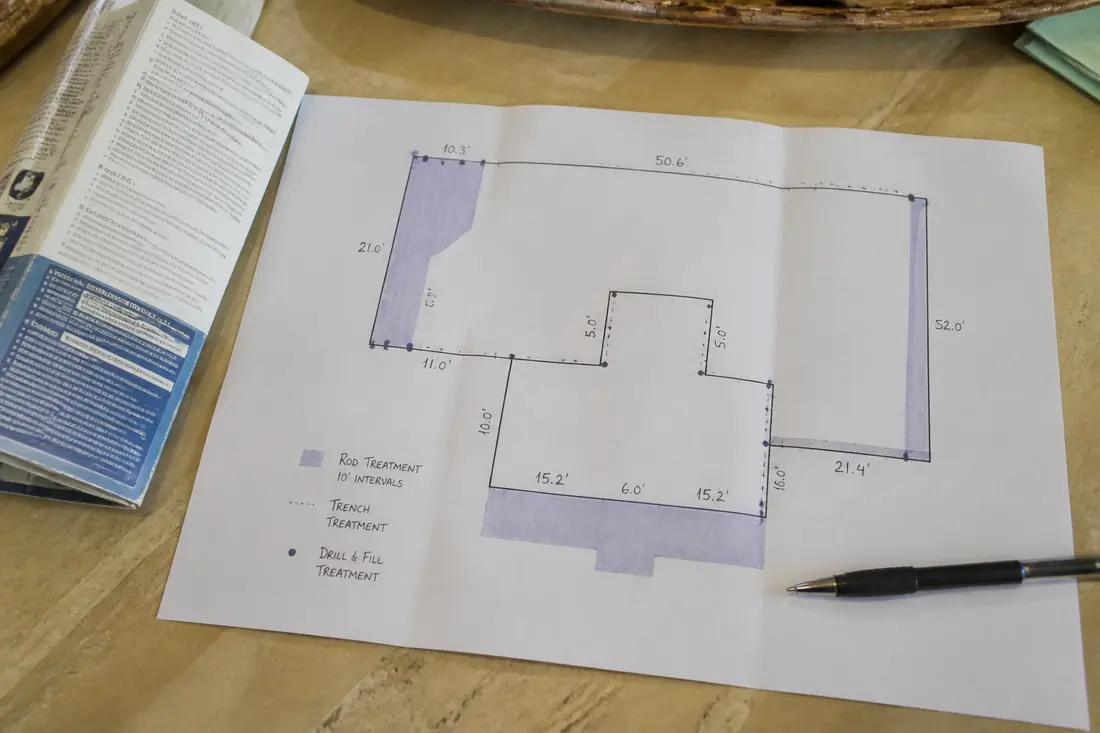
Item 3 asks for a diagram, blueprint or building plat and a description of the structure, and specifies six things it has to show:
- numerical perimeter measurements of the entire structure, as accurately as practical
- areas of active or previous termite activity
- areas to be treated
- known wood destroying insect activity
- areas of conditions conducive to infestation by wood destroying insects
- construction details and other information about construction relevant to the treatment proposal
A sketch with no dimensions on it does not meet the first bullet. That matters commercially, because a subterranean termite treatment is substantially a linear measurement problem: the perimeter is what gets treated, and the perimeter is what the material is priced against. Two proposals for the same house that disagree on price frequently disagree on perimeter, and without numbers on both diagrams there is no way for a homeowner to see it.
The second and fourth bullets record what the inspector found, drawn where it was found. The fifth records what is wrong with the property independent of any current infestation, and it is the one most likely to be skipped.
“If any” is doing a lot of work in item 5
Item 5 reads: “the complete details of the warranty provided, if any.”
Texas does not require a termite warranty. The rule requires that a warranty, if one is offered, be described completely. A proposal with no warranty at all is compliant.
That is not how it is usually understood, and it reframes the comparison between bids. The question is not whether a company may leave the warranty out. It is what a warranty, once offered, has to say.
TDA’s guidance spells that out. If the warranty does not include the entire structure treated, the areas it does include have to be listed. It also has to state the time period, the renewal options and cost, the obligations of the pest control operator to retreat for termite infestations or repair termite damage caused by infestation during the warranty period, and the conditions that could develop as a result of the owner’s action or inaction that could void it.
Read that last clause before signing. A warranty voided by the owner’s action or inaction is a warranty with conditions on landscaping, irrigation, grading and construction, and those conditions are often the reason a claim is refused years later. The rule requires them to be written down. Nothing requires them to be pointed out.
The 8-point type requirement, and why it exists
Items 8 and 11 read oddly until you notice what they are doing. The state is not content to require that the treatment be described. It requires that specific definitions be printed, at a minimum type size, on the document itself.
For post-construction subterranean termite work, item 8 requires definitions of four treatment approaches:
Partial treatments allow “a wide variety of treatment strategies” and are more involved than a spot treatment. The rule gives examples: some or all of the perimeter, bath traps, expansion joints, stress cracks, portions of framing, walls and bait locations.
Spot treatments are defined with a number. Any treatment concerning “a limited, defined area less than ten (10) linear or square feet that is intended to protect a specific location or ‘spot.’” The rule adds the warning directly: “Often there are adjacent areas that are susceptible to termite infestation which are not treated.”
Baiting systems may include interior or perimeter placement of monitoring or baiting systems along with routine inspection intervals, at one or more locations as prescribed by the product label and instructions.
Barriers require that the square footage of a physical barrier be recorded and a diagram describing the installation be provided.
An area under 10 linear or square feet is small. A proposal described in conversation as “treating where we found them” may be a spot treatment in the rule’s terms, and the rule obliges the document to say so in print. That single definition is the most consequential thing on the page for a homeowner comparing a low bid against a high one.
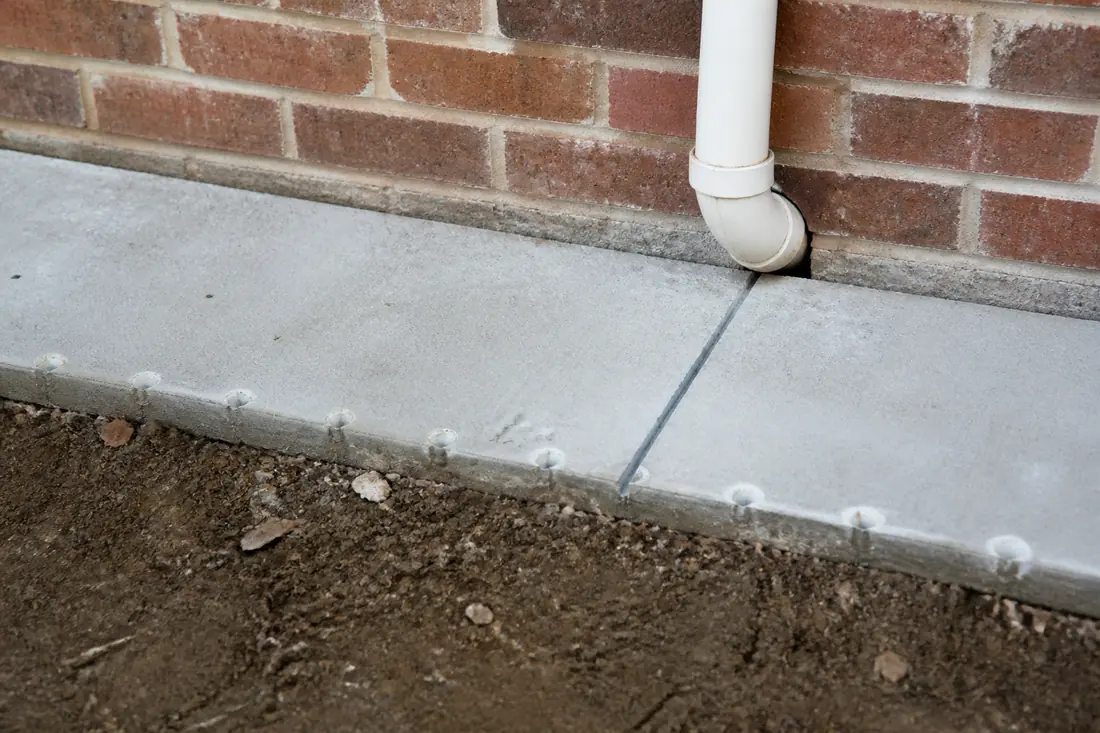
Item 8 then describes what treatment means on two construction types. On pier and beam, treatment of the outer perimeter including porches, patios and the attached garage, and in the crawl space any soil-to-structure contacts, piers and pipes. On slab construction, treatment of the perimeter and all known slab penetrations, as well as any known expansion joints or stress cracks.
Read what those two definitions are doing, because it is easy to overstate. Item 8(B) requires the document to print a definition which, for slab construction, describes treatment as the perimeter plus all known slab penetrations and any known expansion joints or stress cracks. That is the printed description of the work, not a scope mandated on every slab job.
A company may still propose less. Section 7.172(b) permits a treatment of less than the entire structure to accommodate the customer’s requests, and a partial or spot treatment on a slab house is a legitimate product. What the rules require is that the reduced scope be the thing written down, sitting next to the printed definition of the fuller treatment, so a reader can see the gap between them.
Item 11 does the same job for drywood termites, powder post beetles and wood boring beetles. A full treatment is defined as one “to control 100% of the insect infestation by tarpaulin fumigation or appropriate sealing method,” and the rule says it should include the infested structure and all attached structures. A spot treatment is anything less than a full treatment by tarpaulin fumigation, and the rule again states plainly that adjacent susceptible areas are not treated and may continue to harbor insects “throughout the structure without detection.”
Item 7: the number that makes two bids comparable
The concentration of termiticide used, or the minimum number of bait stations to be installed, has to appear on the document.
This is the item that converts a proposal from a price into a specification. Soil termiticides are applied at a concentration set by the product label, and the label establishes the minimum. Item 4 requires that label to be handed over with the proposal, and item 9 tells you to read it: “Review the pesticide label provided to you for minimum treatment specification.”
Those three items work as a set. The label states what the product requires, item 7 states what the company proposes to use, and you can compare them. Our guide to reading a pesticide label covers what else is on that document and why its directions are legally binding on the applicator.
For a baiting proposal the equivalent figure is the minimum station count. A bait system quoted without a station count is quoted without the only number that describes its extent.
The proposal is not a brochure. The treatment is bound to it
Here is the provision that gives all of the above its force, and it sits in a different rule.
Section 7.172(c) states that all treatments “must strictly adhere to the procedures outlined in the disclosure statement required in Section 7.174.” The document is not a sales estimate that the crew may improve upon or economize against on the day. It is the specification.
The rule allows exactly one route around it. A deviation is permitted “when unexpected circumstances occur necessitating a change in the treatment and the applicator responsible for the treatment provides the customer with a written addendum to the contract or disclosure documents at the completion of the treatment.”
So a treatment that differs from the diagram is not automatically a violation, but it does generate a document. If what happened at your house does not match what the proposal described, and no written addendum arrived, that gap is the thing to ask about.
Section 7.172(b) is the counterweight and is worth knowing before an argument starts. A treatment of less than the entire structure is permitted “to accommodate the customer’s requests to allow the treating company to perform the job in a manner prescribed by their professional evaluation and label requirements.” Partial treatment is a legitimate product. It simply has to be the one written down.
Where to find the required treatment sticker, and what it must list
Section 7.172(d) is the most immediately useful provision in any of these rules.
On completing a termite treatment or installing a baiting system, the company must leave “a durable sticker of not less than one (1) inch by two (2) inches in size on the wall adjacent to the water heater, electric breaker box, or beneath the kitchen sink.” The sticker has to give the name, address and telephone number of the business licensee, the name and license number of the applicator, the product used, the date of the treatment or installation, and a statement that the notice should not be removed.
Three places to look, and a 1 inch by 2 inches target. If you have just bought a house in Frisco, Plano or McKinney and want to know whether it has been treated, by whom, with what, and when, that sticker is the record, and it is in the house rather than in a filing cabinet somewhere.
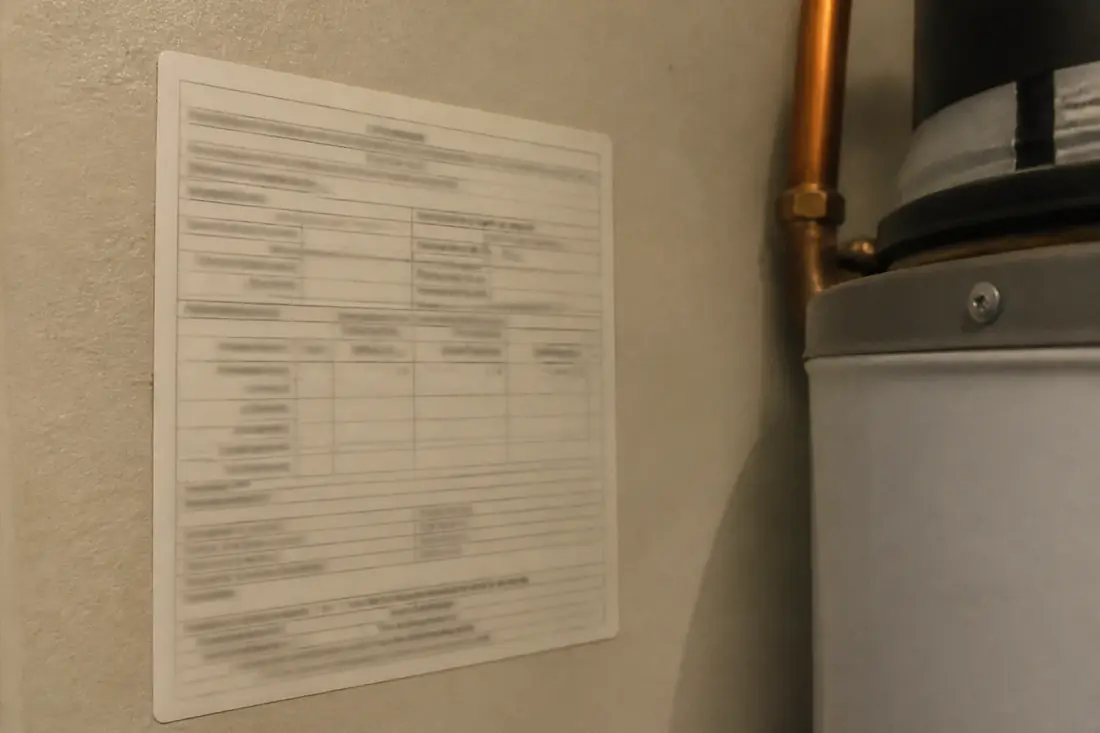
It also does something a warranty cannot. A warranty tells you what a company promised. The sticker tells you what was actually applied and on what date, which is the information a later inspector, a buyer or a second opinion needs.
Pre-construction work has its own rule, and a clock
Item 10 of the disclosure rule requires that for pre-construction treatments, the guide titled “Proper Pre-Construction Subterranean Termite Treatments - A Guide for Builders and Consumers” be provided to the contractor or the purchaser of the pre-treatment service before the treatment begins.
Section 7.173 then governs the work. For a full treatment, “the entire structure must be treated to provide a continuous horizontal and vertical pesticide barrier,” and there is a deadline on finishing it: the final treatment “shall be performed within thirty (30) days of notification of completion of landscaping or one (1) year from the date of completion of construction, whichever comes first.” In plain terms, 30 days after the landscaping is reported finished, or 1 year after construction is finished, whichever arrives sooner.
Section 7.173(d) explains why there is a final treatment at all. To comply, “it will be necessary to return to the pretreatment site after the slab has been poured and/or piers and support beams have been placed to complete the treatment for the vertical barrier.” A pre-treatment is two visits, not one. A builder who believes the job was finished before the slab went down is describing a horizontal barrier with no vertical half.
Where construction has advanced too far for everything to be treated, a partial treatment is permitted, but it generates paperwork: the owner or the person in charge of construction and the licensee sign a statement attesting to the construction conditions, attach it to the contract with an amended diagram showing the exact areas to be treated, and send copies to the property owner within 7 days of the application.
Section 7.173(e) covers the borate route, a primary treatment of the wood framing used in place of a full, partial or bait treatment. It has to be applied to exposed surfaces of wood framing with exterior sheathing in place but before walls are enclosed, to a height of not less than 2 feet above a contact with a slab foundation, or as a 2 foot horizontal and vertical treatment of wood above contact with a concrete crawlspace or basement foundation.
A baiting system may be used in place of a pre-construction treatment if installed within 30 days of notification of completion of landscaping.
Commercial pre-construction work carries a notification duty under 7.173(f). Notice for any structure other than a single family dwelling goes through the department’s designated notification system between 6:00 a.m. and 9:00 p.m., at least 4 hours and no more than 24 hours before the termiticide is applied, giving the address and site location, the type of treatment, the date and time, the approximate unit of measurement under contract, and the business name, license number and physical address. A cancellation has to be reported within 1 hour of the company learning of it.
Section 7.173(g) sets the records a commercial pre-construction job must keep: the unit of measurement treated per application site, the amount of termiticide used per site, the rate at which it was mixed for each site, the number of application tanks in use, the capacity in gallons of each tank, and the start and stop time for the treatment.
What the building code accepts as termite protection in the first place is a separate question, covered in our guide to the methods the code accepts.
Re-treatment: a shorter list, and a prohibition
Section 7.174(c) sets a reduced requirement when a company re-treats a property for an existing customer. Three things before the re-treatment: the label of the pesticide to be used, a diagram or updated diagram of the structure showing the areas to be treated, and a consumer information sheet under Section 7.147.
Note that the diagram survives into the short list. Even on a re-treatment, the state wants a drawing of what is about to be done.
TDA’s guidance restricts when a re-treatment may happen at all. Re-treatment for subterranean termites “can only be performed if there is clear evidence of re-infestation or disruption of the barrier due to construction, excavation or landscaping and/or evidence of the breakdown of the termiticide barrier in the soil.” And then, directly: “Annual retreatment of the structure is prohibited unless there is clear evidence that re-infestation or barrier disruption has occurred.”
A yearly re-treatment sold as routine maintenance is not what the state contemplates. Annual inspection is a different service, and so is a bait system with scheduled monitoring visits, which is monitoring rather than re-treatment. The paperwork should show which of the three is being sold.
All three rules impose the same retention duty, and it is worth knowing the number. Sections 7.172(e), 7.173(g) and 7.174(d) each require the business license holder, or the certified noncommercial applicator, to keep correct and accurate copies of the disclosure documents for 2 years. If your copy goes missing, the company is obliged to hold one for that period.
The consumer information sheet, and the 48-hour rule
Item 12 points to Section 7.147, which matters if you rent, manage property or are having a workplace treated.
For an indoor treatment at a private residence that is not a rental property, the applicator or technician makes the consumer information sheet available to the owner. At a residential rental property with fewer than 5 rental units, it goes to each resident on request at the time of each treatment.
At a property with 5 or more rental units, the obligation changes shape. The applicator supplies the sheet and a pest control sign to the owner or manager, and then the owner or manager, explicitly not the applicator, must notify residents in direct or adjacent areas at least 48 hours before each planned treatment, either by posting the sign in an area of common access or by leaving it on the front door of each unit or in a conspicuous place inside. Workplaces work the same way, through the employer or building manager.
The division of duty is the part people get wrong. The pest control company supplies the materials. The property owner does the notifying.
What a termite inspection is not
Since the diagram records what an inspector found, the limits of that finding are worth stating. TDA states them without hedging.
An inspection is made in areas that are readily accessible and where infestation is most likely to occur. No inspection is made in areas that require the breaking apart, dismantling or removal of any objects. Therefore, in the agency’s own words, “it is not a warranty as to the absence of wood destroying insects. It is not a structural damage report.” The agency adds that an inspector “is not ordinarily a construction or building trade expert and is not expected to possess any special qualifications that enable him to detect the extent of structural damage.”
Two consequences follow. A clear report is a statement about what was visible, not a guarantee about what is inside a wall. And a report that finds damage is not an assessment of how bad the damage is; that is a question for a structural engineer or a builder.
TDA also lists seven conditions conducive to termite infestation, which is the checklist behind sub-item 3(E) on the diagram: earth-to-wood contact, firewood stacked against the foundation, wood debris in the crawl space, wood mulch within 3 feet of the foundation, faulty grade, insufficient ventilation, and moisture. Six of the seven are homeowner-controllable and cost little to fix, which makes that sub-item on the diagram the most actionable thing on the document.
Two figures the agency offers alongside that list are worth repeating as the agency’s own, rather than as measurements of your house. TDA states that termites “only need 1/32 of an inch to gain entrance,” and that termites “can still be in the walls of the house six to eight weeks even after a proper termite treatment.”
The second is the more useful. Activity seen 6 to 8 weeks after an application is not by itself evidence that the treatment failed. The first is a reminder that at 1/32 inch, sealing the cracks you can see is sensible and not a substitute for treatment.
Common mistakes
Treating the verbal number as the estimate. A verbal quote is permitted to convey a general range of costs and nothing more. The document is the estimate, and it has to arrive before treatment.
Comparing prices without comparing diagrams. Perimeter measurement drives material quantity on a soil treatment. Two bids with different prices and no dimensions on either drawing cannot be compared on anything but trust.
Assuming a warranty is required. It is not. Item 5 says “if any.” Check whether one is offered before checking what it covers.
Skipping the void conditions. The warranty has to state what owner action or inaction could void it. Landscaping, irrigation changes and construction are common entries, and they are the reason claims get refused.
Accepting “spot treatment” without the definition. The rule defines it as an area under 10 linear or square feet and requires that definition to be printed. A proposal using the phrase without the definition leaves out the part that makes it meaningful.
Assuming a pre-treatment was one visit. Section 7.173(d) requires a return to the site after the slab is poured to complete the vertical barrier, and 7.173(c) puts a clock on finishing: 30 days from notification that landscaping is complete, or 1 year from completion of construction, whichever comes first.
Agreeing to annual re-treatment as routine. TDA says annual re-treatment is prohibited absent clear evidence of re-infestation or barrier disruption. Annual inspection and bait monitoring are different services.
Not looking for the sticker. It is required within three named locations and it carries the product and the date. Checking takes a minute and it is the only record kept inside the house.
What drives the cost
There is no meaningful single price for a termite treatment without knowing the structure, so what follows is what a real number depends on.
Construction type is the first variable, and the rule itself explains why: the treatment described for a slab house is the perimeter plus all known penetrations, expansion joints and stress cracks, while the treatment described for pier and beam is the perimeter plus every soil-to-structure contact in the crawl space. Those are different quantities of work on houses of the same square footage.
Perimeter length follows, since soil treatment is applied along it. Then the extent proposed: a full perimeter treatment, a partial treatment, or a spot treatment under 10 linear or square feet are three different jobs that can carry the same label in conversation.
Then the method. A liquid soil termiticide and a baiting system are priced differently and carry different ongoing obligations, which is why item 7 asks for either a concentration or a minimum station count rather than treating them as interchangeable. Access matters too: bath traps, slab penetrations under cabinetry and obstructed crawl spaces all add labor.
On pre-construction work the cost structure is different again, because 7.173 builds in a second mobilization for the vertical barrier and, on commercial jobs, a notification and record-keeping burden covering mix rates, tank capacities in gallons and start and stop times.
Finally the warranty, where one is offered. A warranty that includes repair of termite damage is a different commercial product from one that covers retreatment only, and under TDA’s guidance both the scope and the renewal cost have to be stated.
Before you sign
Ask for the written estimate and the disclosure documents together, and check the diagram first. Are there numbers on the perimeter? Are the areas to be treated marked separately from the areas where activity was found?
Then look for item 7. A concentration or a station count should be on the page. If neither is, the proposal has not described its own extent.
Read the treatment definitions in the small type and find which one matches what you were told in the yard. If you were told “we will treat where the problem is” and the printed definition of a spot treatment is on the document, those are the same statement and only one of them is in writing.
Check whether a warranty is offered at all, and if so, read the section on what voids it before the section on what it covers.
Confirm the signature belongs to someone licensed in the termite category, and that the jurisdiction statement is present. Both are required items, and their absence is the cheapest available signal that the rest of the document was not built from the rule.
After the work, find the sticker and keep the documents. The company holds its copy for 2 years; nothing requires you to be given a second one later.
If something is wrong and the company will not resolve it, TDA’s Structural Pest Control Service takes complaints at (866) 918-4481 or spcs@TexasAgriculture.gov. The agency notes a typical response of about 3 weeks and advises against repairing damage or retreating before an inspector has investigated, since a more thorough investigation is possible while the damage is visible. Know the limits of that route: SPCS states it cannot compel a company to pay damages and cannot settle a contractual disagreement, though it can pass settlement offers between the parties.
The termite inspection and termite treatment pages describe the work itself, and the pre-construction treatment page covers the soil treatment that goes in before a slab is poured.
This guide explains the rules in plain language and is not legal advice. The Texas Department of Agriculture’s current regulations and its determination in a specific case control what is actually required, and the rule text quoted here should be checked against the current version before being relied on.
The most useful thing a homeowner can do with all of this is ask for the documents before the price discussion rather than after. A company that produces a measured diagram, a label, a concentration and a written definition of the treatment extent has told you what it intends to do. One that produces a figure has told you what it intends to charge.
Sources
- 4 Texas Administrative Code Section 7.174, Wood Destroying Insect Treatment Disclosure Documents. Subsection (a), the requirement that disclosure documents accompany each written estimate, the limitation of verbal estimates to a general range of treatment costs, the requirement for a written estimate before a treatment begins, the restriction of written estimates and disclosure documents to licensed technicians and certified applicators licensed in the termite category, and the exclusion of carpenter ants. Subsection (b), all thirteen required items, including the business name, address, phone number, TPCL number and date; the address of the structure; the diagram and its six sub-items including numerical perimeter measurements and areas of conditions conducive to infestation; the pesticide label and the physical barrier measurement and installation diagram; the complete details of the warranty provided, if any; the signature of approval; the concentration of termiticide or minimum number of bait stations; the 8-point type definitions of partial treatments, spot treatments as an area less than ten (10) linear or square feet, baiting systems and barriers, and the pier and beam and slab construction descriptions; the verbatim diagram and label statement with the TDA address and phone number; the pre-construction guide for builders and consumers; the full treatment and spot treatment definitions for drywood termites, powder post beetles and wood boring beetles; the consumer information sheet; and the verbatim jurisdiction statement. Subsection (c), the three-item list for re-treatment of an existing customer. Subsection (d), the two-year record retention requirement. Adoption history, effective 1 September 1987 and last amended effective 16 January 2023.
- 4 Texas Administrative Code Section 7.172, WDI Post Construction Treatments. Subsection (a), EPA and department registration and application at the rates and methods on the product labeling. Subsection (b), treatment of less than the entire structure permitted to accommodate the customer’s requests. Subsection (c), the requirement that all treatments strictly adhere to the procedures outlined in the Section 7.174 disclosure statement, and the written addendum required where unexpected circumstances necessitate a change. Subsection (d), the durable sticker of not less than one (1) inch by two (2) inches, its three permitted locations adjacent to the water heater, electric breaker box or beneath the kitchen sink, and the six items it must carry including the applicator’s license number, the product used and the date. Subsection (e), the two-year retention of the disclosure documents.
- 4 Texas Administrative Code Section 7.173, Subterranean Termite Pre-Construction Treatments. Subsection (c), the continuous horizontal and vertical pesticide barrier for a full treatment, the requirement that the final treatment be performed within thirty (30) days of notification of completion of landscaping or one (1) year from completion of construction whichever comes first, and the signed statement, amended diagram and seven (7) day copy requirement where a partial treatment is permitted. Subsection (d), the necessity of returning to the pretreatment site after the slab is poured or piers and support beams are placed to complete the vertical barrier. Subsection (e), the primary wood framing treatment applied before walls are enclosed to a height of not less than two (2) feet above contact with a slab foundation. Subsection (f), the notification window for structures other than single family dwellings, between 6:00 a.m. and 9:00 p.m. and at least four (4) and no more than twenty-four (24) hours before application, and the one (1) hour cancellation notice. Subsection (g), the commercial record-keeping requirements including mix rate, number of application tanks, tank capacity in gallons and start and stop times, the two-year retention, and the baiting system alternative installed within thirty (30) days of notification of completion of landscaping.
- 4 Texas Administrative Code Section 7.147, Consumer Information Sheet. Subsection (a), private residences that are not rental property. Subsection (b), residential rental properties with fewer than five (5) rental units and the on-request standard at the time of each treatment. Subsection (c), properties with five or more rental units, the pest control sign, and the 48 hour notification duty placed on the owner or manager rather than the applicator. Subsection (d), the equivalent workplace requirements.
- Texas Department of Agriculture, Structural Pest Control Service, Termite FAQs. The five-item summary of termite treatment disclosure documents required at the time a bid is submitted and prior to treating, and the statement that “At no time will a proposal be given on the back of a business card.” The warranty content requirements, including listing the areas included where less than the whole structure is covered, the time period, the renewal options and cost, the operator’s obligations to retreat or repair, and the conditions arising from the owner’s action or inaction that could void the warranty. The limits on re-treatment and the statement that annual retreatment is prohibited absent clear evidence of re-infestation or barrier disruption. The seven conditions conducive to infestation including wood mulch within 3 feet of the foundation. The 1/32 of an inch entry figure and the six to eight weeks post-treatment statement, both quoted as the agency’s own. The limits of a wood destroying insect inspection, including that it is not a warranty as to the absence of wood destroying insects and not a structural damage report. The complaint route, the approximately three-week response time, the advice against repairing or retreating before an inspection, and the statement that SPCS cannot compel payment of damages or settle a contractual disagreement.