
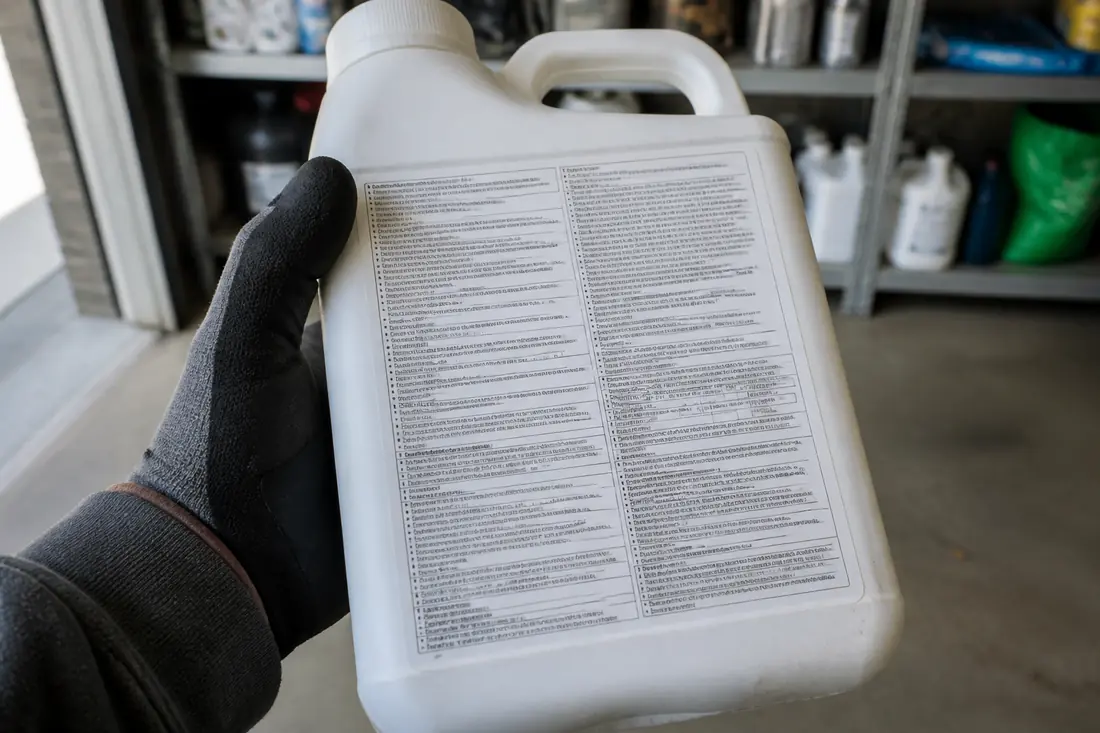
A technician arrives, treats the perimeter of the house, leaves a service ticket with a product name on it, and drives away. Most homeowners in Frisco file that ticket without reading it, and there is nothing unreasonable about that. The product name means nothing on its own.
What is worth knowing is that behind that name sits a document with a strange legal status. A pesticide label in the United States is not marketing material that happens to carry warnings. It is an enforceable federal instrument, approved by the Environmental Protection Agency before the product may be sold, and using the product in a way the label does not permit is a violation of federal law in itself.
The regulation says so in almost those words. Every product with directions for use must carry, immediately below its statement of use classification, the sentence: “It is a violation of Federal law to use this product in a manner inconsistent with its labeling.”
That single line is why a good pest control company behaves the way it does — why the technician measures rather than estimates, why some treatments cannot be applied where children play until a surface has dried, and why “we’ll just put a bit more down” is not a favor anyone can do you. It is also the basis for the handful of questions that will tell you, in about ninety seconds, whether the company treating your house is careful.
Last reviewed: 10 September 2026 against 40 CFR Part 156, Labeling Requirements for Pesticides and Devices, as published by the Government Publishing Office, 2024 annual edition.
The signal word, and what it is actually ranking
The most legible thing on a pesticide container is a single word in the middle of the front panel. It is not a marketing choice. Under § 156.64, each product must bear on the front panel a signal word “reflecting the highest Toxicity Category (Category I is the highest toxicity category) to which the product is assigned by any of the five routes of exposure in § 156.62.”
The four outcomes are fixed:
- Toxicity Category I — “DANGER.” In addition, where the Category I assignment comes from oral, inhalation or dermal toxicity rather than from skin and eye irritation, “the word ‘Poison’ must appear in red on a background of distinctly contrasting color, and the skull and crossbones symbol must appear in immediate proximity to the word ‘Poison.’”
- Toxicity Category II — “WARNING.”
- Toxicity Category III — “CAUTION.”
- Toxicity Category IV — no signal word is required. If one is used, it must be “CAUTION.”
Two things follow that are not obvious. First, the signal word reflects the worst route of exposure, not an average — a product that is mild to swallow but severe in the eyes carries the severe rating. Second, and more useful day to day: a product with no signal word at all is not an unlabeled product or a corner being cut. Category IV is a real outcome, and much routine residential work is done with products at the gentler end of the scale.
So “DANGER” on a container is not evidence of a reckless company, and “CAUTION” is not a guarantee of a harmless one. The signal word tells you the hazard of the concentrate in the jug. What reaches your baseboards is a dilution, and the dilution is governed by a different part of the label entirely.
Directions for Use: the part that binds the applicator
The section headed “Directions for Use” is the operative one. Section 156.10(i) sets out what it must contain, and the contents are more prescriptive than most people expect: the sites the product may be applied to, the target pests, the dosage rate, the method of application, the frequency and timing, and any limitations or restrictions on reentry, storage and disposal.
Immediately under that heading comes the statement of use classification, and immediately under that comes the federal-law sentence quoted above.
The structure matters because it defines what “off-label” means. An applicator who uses a product on a site the label does not list, at a rate above the label rate, or more often than the label allows, is not exercising professional judgment. They are outside the law, regardless of whether the result looks fine.
This is the reason a competent technician will sometimes decline to do the obvious-sounding thing. A product cleared for a foundation perimeter may not be cleared for a vegetable bed four feet away. One rated for indoor crack-and-crevice use may not be permitted as a broadcast application across a floor. The restriction is not company policy, and it is not negotiable at the door.
General versus restricted use
Section 156.10(j) divides products into two use classifications, and the label must say which applies.
Products classified for general use bear the words “General Classification” immediately below the “Directions for Use” heading. The regulation adds a warning with teeth: any reference to the general classification that suggests the product’s utility “extends beyond those purposes and uses contained in the Directions for Use will be considered a false or misleading statement” under the misbranding provisions.
Restricted use products are labeled far more conspicuously. Under § 156.10(j)(2), the statement “Restricted Use Pesticide” must appear at the top of the front panel, set in type of the same minimum sizes required for human hazard signal words, and “appearing with sufficient prominence relative to other text and graphic material on the front panel to make it unlikely to be overlooked under customary conditions of purchase and use.”
A restricted use product may only be applied by, or under the direct supervision of, a certified applicator. For a homeowner, the practical significance is that some of what a licensed company can legally do is genuinely unavailable at a hardware store — which cuts against the common assumption that professional treatment is the same chemicals with a service call attached.
Where the safety information actually lives
Hazard and precautionary statements are required by § 156.10(a)(1)(vii), covering human and domestic animal hazards under subpart D of the part and environmental hazards under subpart E.
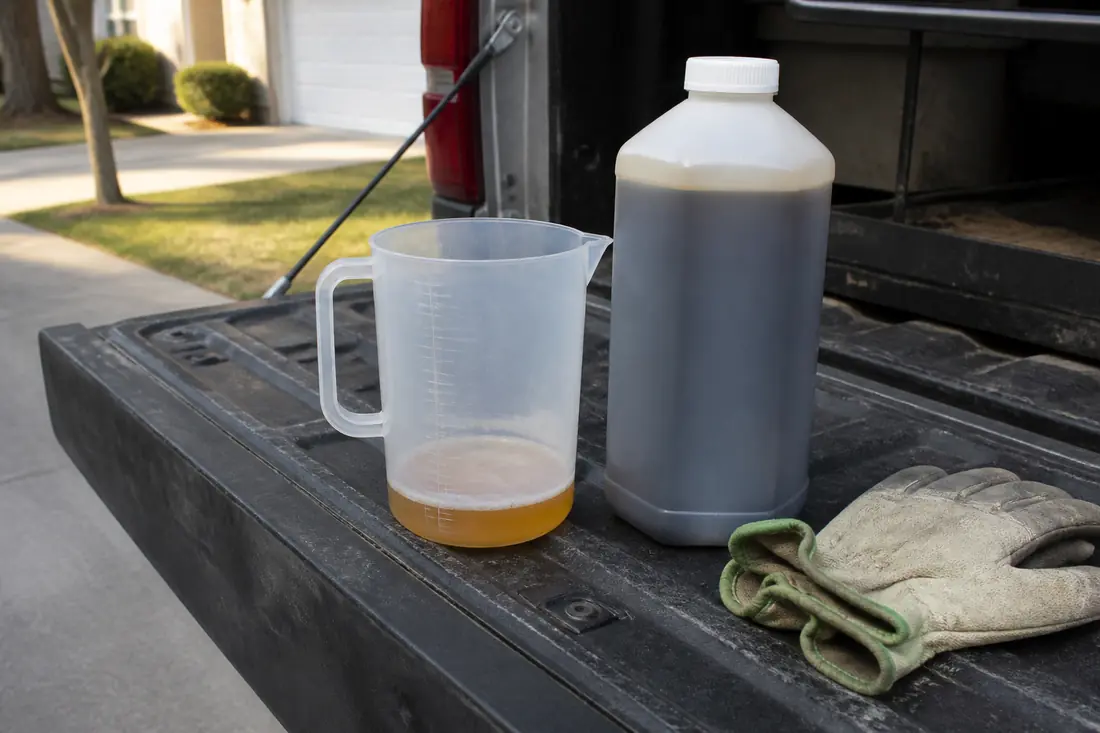
Their placement is regulated as well, and it explains why a label looks the way it does. The signal word, the child hazard warning and — in certain cases — the first aid statement must appear on the front panel, and also in any supplemental labeling intended to accompany the product in distribution or sale. Other hazard and precautionary statements may appear on other panels. Those not required on the front panel “must be at least 6 point type.”
So the front panel is a summary, deliberately kept short so it cannot be missed, and the substance is elsewhere on the container in small print. If you want to know what a product actually requires around pets, fish tanks, pollinators or food-preparation surfaces, the front panel is the wrong place to look.
Misbranding, and why claims matter
Section 156.10(a)(5) sets out when a product counts as misbranded, drawing on section 2(q)(1)(A) of the Act: a pesticide is misbranded if its labeling “is false or misleading in any particular including both pesticidal and non-pesticidal claims.”
That last clause is worth pausing on. The prohibition is not limited to exaggerated claims about killing pests. A false statement about safety, about composition, or about approval is misbranding just as squarely as an inflated efficacy claim.
For a homeowner comparing companies, it puts a familiar sales line in perspective. Phrases like “EPA approved,” “safe,” or “non-toxic” applied to a pesticide are claims of a kind the labeling rules treat carefully and, in several forms, prohibit outright. A company that leans on them in conversation is describing products in terms their own labels are not allowed to use.
What to ask before a treatment
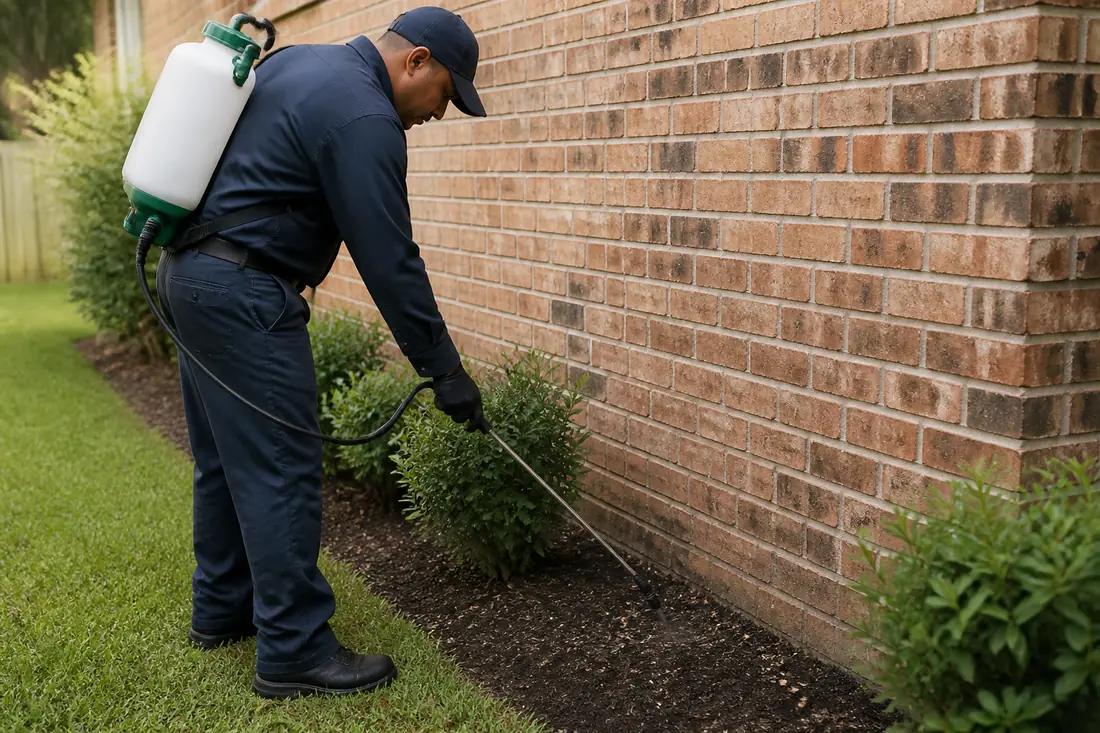
None of this requires you to become an expert. It supports four questions, and the manner of the answers tells you as much as the content.
“Which product are you using, and can I see the label?” The label travels with the product and the technician can show it to you. Hesitation here is the strongest single signal you will get.
“What is the signal word on it?” A technician who knows without checking is working from knowledge rather than habit.
“What does the label say about reentry — how long before children or pets are back on this?” This is on the label, it varies by product and site, and a specific answer is a good sign. “It’s fine once it’s dry” may well be correct; it should still be traceable to the document.
“Is it a restricted use product?” Either answer is fine. The point is that the question has a definite answer and the person applying it should know it.
Three mistakes worth avoiding
Treating the signal word as a verdict on the company. It describes the concentrate’s hazard category, not the care with which it is applied or the concentration that reaches your house.
Asking for a stronger dose. Rate is a label term. An applicator who agrees to exceed it is telling you they will go outside the Directions for Use when a customer pushes, which is a poor foundation for the treatments you do not watch.
Assuming a licensed applicator has read every label recently. Licensing and label compliance are different obligations — one is about the person, the other about the specific product in the tank on the day. Our guide to checking a Texas pest control license covers the first; this is the second.
Before you sign
Ask what the treatment plan is for your particular problem, and what products it involves at each stage. A company that can explain why a given product is right for a given site — and what the label permits it to do there — is showing you the reasoning you are actually paying for. A company that treats the question as an obstacle is showing you something too.
The sequence that saves money is unglamorous: identify the pest properly first, then choose the product to match, rather than applying a standing package and adjusting later. The label is written around that order, and so is the law.
This guide explains federal pesticide labeling requirements in plain language and is not legal advice. EPA’s current regulations and the approved labeling for a specific product control what is actually required.
Sources
- 40 CFR Part 156 — Labeling Requirements for Pesticides and Devices, 2024 annual edition, U.S. Government Publishing Office. General labeling requirements, Directions for Use, use classification and misbranding at § 156.10; toxicity categories at § 156.62; signal words at § 156.64.
- EPA — Pesticide Labels, the agency’s own overview of what a label is and why its terms are enforceable.