
Termite Control in Frisco, TX — What to Expect
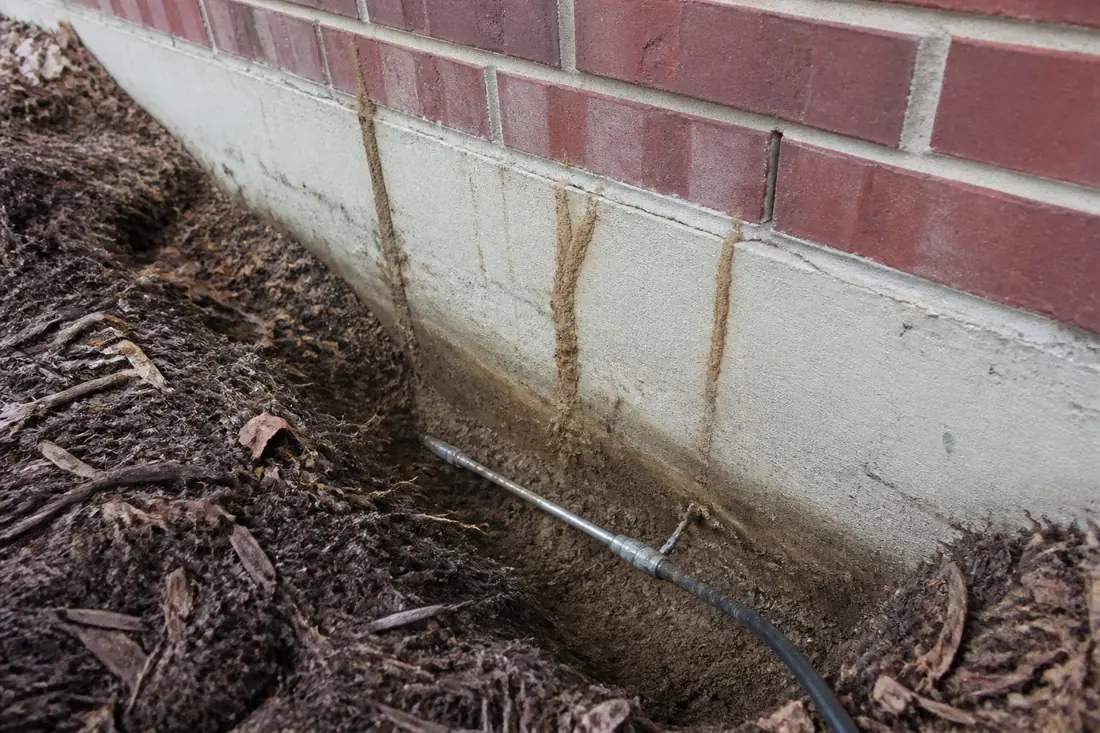
Termite control in North Texas is largely a conversation about soil. Termite activity in Collin and Denton County is dominated by the eastern subterranean termite, which lives in the ground rather than in the timber it eats. It reaches a structure by travelling through soil to a point of contact, then building shelter tubes across anything it cannot tunnel through. That is why treatment concentrates on the soil and the perimeter rather than on the wood, and why a slab foundation does not prevent the problem.
A slab is not a barrier. It is a surface with penetrations through it — plumbing stub-outs, expansion joints, the junction where a porch or patio was poured against the house, and cracks that open as the slab moves on Blackland Prairie clay. Any of those is a route in, and none of them is visible from inside once the building is finished. That combination is what makes inspection worth doing properly rather than quickly.
The work divides into three parts that are covered in depth on their own pages. Inspection establishes whether there is activity and where. Treatment establishes a treated zone in the soil, or works the colony through a bait system. Prevention is the part most often skipped: correcting the conditions that made the structure reachable, and keeping the treated zone intact when landscaping, drainage or an addition disturbs it.
What Is Included
- Eastern subterranean termite, the species that matters in North Texas
- Slab penetrations, expansion joints and porch junctions checked specifically
- Liquid soil treatment and bait systems both explained, not just sold
- Pre-construction soil treatment for new builds
- Conditions corrected, not just the colony treated
- Written findings before any treatment is priced
The Termite Control Process
- 1
Step 1: Inspection First
Whether there is active termite work, where it is entering and how far it has gone. Treatment specified without an inspection is treatment specified without knowing the answer.
- 2
Step 2: Identify the Route In
Plumbing penetrations, expansion joints, porch and patio junctions, grade against siding, and any wood in contact with soil. The route matters because it determines whether the treated zone will hold.
- 3
Step 3: Choose the Method Honestly
Liquid establishes a treated zone immediately but needs continuous soil access. Bait works the colony and suits awkward sites but takes months. Neither is better in general; they fail in different situations.
- 4
Step 4: Correct the Conditions
Mulch pulled back, grade corrected, moisture sources addressed. A structure that stays easy to reach gets reached again, whatever was applied to the soil.
Types of Termite Control in Frisco
Termite Inspection
Establishing whether activity is present and where, before anything is treated. Covered in full on its own page.
Liquid Soil Treatment
A treated zone established in the soil around and beneath the structure, by trenching and where necessary drilling the slab.
Bait Systems
Stations worked over time to reach the colony, suited to sites where continuous trenching is impractical.
Pre-Construction Treatment
Soil treated before the slab is poured, which is far less expensive than treating the same structure once it is built.
What Matters When Choosing a Termites Contractor in Frisco, TX
The pest identified before anything is treated
German cockroaches, subterranean termites and roof rats each need a different answer. Treating for the wrong one costs you a season.
Entry points sealed, not just sprayed
Rodents come back through the same gap they used the first time. Sealing those entry points is what makes the treatment hold.
Straight answers on what comes back
Some problems take one visit. Some need a schedule. You will know which before you commit to anything.
Termite Control FAQs
How do I know if I have termites?
The most reliable sign is mud tubes on the foundation, which are termites and nothing else. Swarmers indoors in spring are another, though they are easily confused with flying ants: termite swarmers have two pairs of wings the same length and a straight waist, flying ants have a pinched waist and uneven wings. Damaged wood that sounds hollow, and paint that looks blistered along a baseboard, are worth an inspection.
Does a slab foundation prevent termites?
No. A slab is a surface with penetrations through it, not a sealed barrier. Plumbing stub-outs, expansion joints, the junction where a porch was poured against the house, and cracks that open as the slab moves all provide routes that are invisible from inside once the building is finished.
How long does termite treatment last?
It depends on the method, the product, the soil and whether the treated zone stays intact. A liquid treatment establishes a zone that degrades over time and can be broken by trenching, landscaping or an addition. Bait systems are ongoing by design. Rather than quote a fixed number of years, the useful question is what would disturb the protection and when it should next be checked.
Do termites come back?
The colony that was treated may not, but the conditions that made the structure reachable do not change on their own. Soil-to-wood contact, moisture held against the foundation and mulch banked up against siding all make a return more likely. That is why prevention is part of the work rather than an upsell.
Liquid treatment or a bait system?
Neither is better in general and they fail in different situations. Liquid gives a treated zone immediately but requires continuous access to the soil, which some sites do not allow. Bait works the colony and suits awkward layouts, but it works over months rather than days. The site usually decides.
Other Services in Frisco
- Rodent Exclusion and ProofingSealing the gaps rodents actually use, so the trapping does not have to be repeated every winter.
- Rat and Mouse ControlRoof rats in the attic and house mice in the walls — trapped out, then shut out so the next ones cannot follow.
- Pre-Construction Termite TreatmentSoil treatment before the slab is poured — far less expensive than treating the same structure once it is built.