
Termite Treatment in Frisco, TX — What to Expect
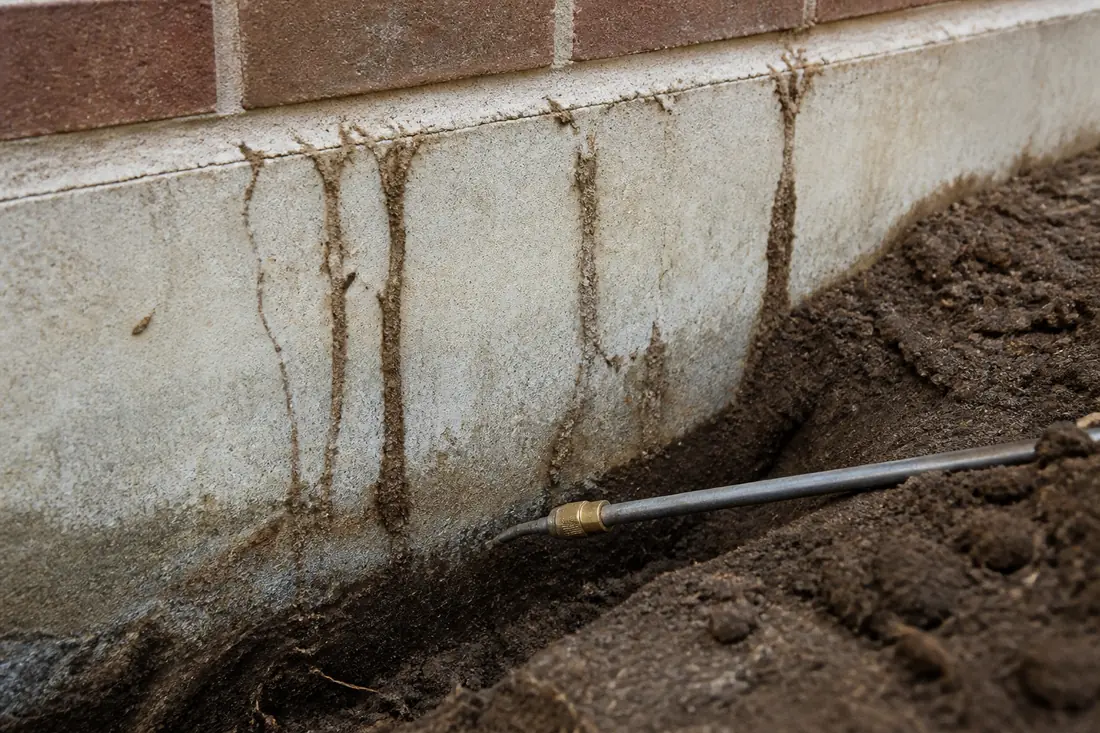
Termite activity in Collin and Denton County is dominated by the eastern subterranean termite. It lives in the soil, not the timber, and it reaches the structure through mud tubes built up the foundation or straight through cracks in the slab. That is why treatment is a soil and perimeter job rather than something sprayed on the wood you can see.
Blackland Prairie clay makes it worse. The soil swells when it rains and shrinks hard in a Texas summer, and the gaps that opens around a slab are the route in. A house can be treated correctly and still need the perimeter re-established after a few seasons of that movement.
What matters is finding every point of contact between soil and structure — plumbing penetrations, expansion joints, porches, patio slabs poured against the house — because a barrier with one gap in it is not a barrier.
What Is Included
- Species confirmed before a treatment is chosen
- Mud tubes traced back to the soil contact that fed them
- Full perimeter treated, including slab penetrations
- Liquid barrier or bait system selected to the structure
- Conducive conditions identified — mulch depth, grade, downspouts
- Told plainly when damage needs a builder, not a technician
The Termite Treatment Process
- 1
Step 1: Inspection and Species ID
Subterranean, drywood and carpenter ants all leave different evidence and need different answers. Getting this wrong is the most expensive mistake available.
- 2
Step 2: Mapping Soil Contact
Every place the structure touches soil is a possible entry: expansion joints, plumbing penetrations, porch slabs, planters built against the wall.
- 3
Step 3: Choosing the Method
A liquid barrier treats the soil around the whole structure. A bait system works the colony instead. Slab construction, landscaping and access decide which is realistic.
- 4
Step 4: Application
Trenching and injecting around the perimeter, drilling through the slab where the soil cannot be reached from outside, and treating at label rate rather than by eye.
- 5
Step 5: Conducive Conditions
Mulch piled against siding, grade sloping toward the house and downspouts discharging at the foundation all keep the soil wet and the termites interested. These get flagged whether or not they are ours to fix.
Types of Termite Treatment in Frisco
Liquid Barrier Treatment
A treated zone in the soil around the entire structure. Termites passing through it carry the active ingredient back to the colony.
Bait Station Systems
In-ground stations monitored and baited over time, working the colony rather than the perimeter. Suits sites where trenching is impractical.
Slab Penetration Treatment
Drilling and injecting where a patio, porch or garage slab sits against the house and hides the soil contact.
Spot and Localised Treatment
Targeted work on an identified area of activity, appropriate where the infestation is genuinely contained and honestly described as such.
What Matters When Choosing a Termites Contractor in Frisco, TX
The pest identified before anything is treated
German cockroaches, subterranean termites and roof rats each need a different answer. Treating for the wrong one costs you a season.
Entry points sealed, not just sprayed
Rodents come back through the same gap they used the first time. Sealing those entry points is what makes the treatment hold.
Straight answers on what comes back
Some problems take one visit. Some need a schedule. You will know which before you commit to anything.
Termite Treatment FAQs
How do I know if it is termites or ants?
Swarming termites have two pairs of wings the same length and a straight waist; flying ants have a pinched waist and uneven wings. Mud tubes on the foundation are termites and nothing else. If you have a swarm, keep a few in a bag — identification is much easier with a specimen than a description.
Do I need to leave the house during treatment?
Not for a standard subterranean treatment. The work is outside in the soil and, where slab drilling is needed, at the perimeter. Whole-structure fumigation is a different job and is rarely what North Texas subterranean termites call for.
Why do termites keep coming back to the same house?
Usually because the conditions that attracted them are unchanged — soil held wet against the foundation, mulch or wood in contact with siding, poor drainage. The colony is not personal; the house is just the easiest food in reach.
Is a bait system better than a liquid treatment?
Neither is better in general; they fail in different situations. Liquid gives a treated zone immediately but needs continuous soil access. Bait works the colony and suits awkward sites, but it takes months rather than days.
Can I treat termites myself?
Products sold for it exist. The reason they usually fail is not the chemical but the coverage — a barrier with an untreated gap is simply a route in, and the gaps are behind porches and under slabs where they are hardest to reach.
Other Services in Frisco
- Termite InspectionWood-destroying insect inspections, including the report lenders ask for when a Texas property changes hands.
- Pre-Construction Termite TreatmentSoil treatment before the slab is poured — far less expensive than treating the same structure once it is built.
- Rat and Mouse ControlRoof rats in the attic and house mice in the walls — trapped out, then shut out so the next ones cannot follow.